

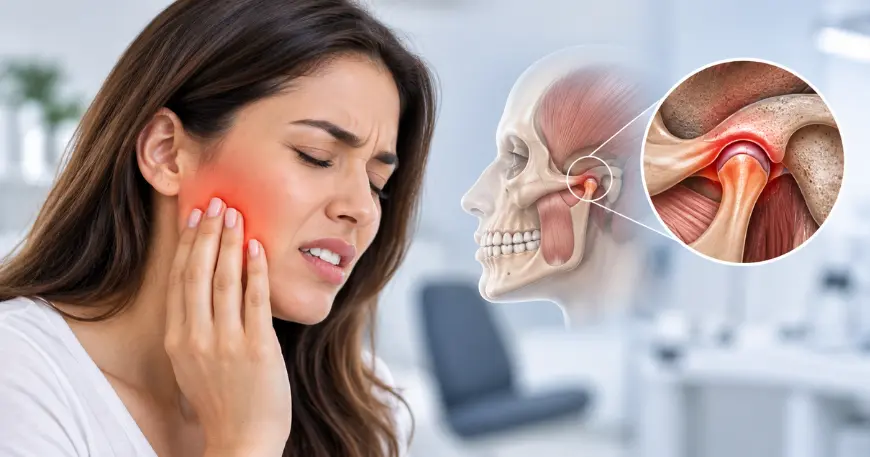
If your jaw clicks, feels tight, hurts when you chew, or seems difficult to open fully, you may have heard someone mention TMJ.
But what is TMJ exactly?
TMJ stands for the temporomandibular joint, the joint that connects your lower jaw to your skull. You have one on each side of your face, just in front of your ears. These joints help you talk, chew, yawn, and move your jaw from side to side.
When people say they “have TMJ,” they usually mean they have a problem affecting this joint or the surrounding jaw muscles. The more accurate term is TMD, or temporomandibular disorder.
This guide explains what TMJ is, common symptoms, possible causes, and when treatment may be needed.
What Is TMJ?
The temporomandibular joint is the hinge-like joint that connects the jawbone, known as the mandible, to the temporal bone of the skull.
It allows your jaw to move:
- Up and down
- Forward and backward
- Side to side
These movements are essential for everyday activities such as speaking, chewing, swallowing, and yawning. The TMJ is more complex than a simple hinge because it combines both hinging and sliding movements.
What is the Difference Between TMJ and TMD?
These terms are often used interchangeably, but they are not technically the same. TMJ refers to the joint itself and TMD refers to disorders affecting the joint, the jaw muscles, or the structures around them.
So when someone says “I have TMJ,” they usually mean they have a temporomandibular disorder.
What Are the Symptoms of TMJ Problems?
TMJ-related symptoms can vary considerably. Some people experience occasional clicking with no pain, while others have ongoing discomfort that affects chewing or speaking.
Common symptoms include:
- Jaw pain
- Jaw stiffness
- Clicking or popping sounds
- Pain while chewing
- Difficulty opening the mouth fully
- Jaw locking
- Facial pain
- Pain around the ear
- Headaches
- Tender jaw muscles
- Pain around the temples
- A feeling that the bite has changed
You may experience symptoms on one side or both sides.
Is Jaw Clicking Always a TMJ Problem?
Not necessarily. Some people have clicking or popping sounds in their jaw without pain or restricted movement. A painless click does not automatically mean treatment is needed. However, if clicking is accompanied by:
- Pain
- Jaw locking
- Limited opening
- Swelling
- Difficulty chewing
What Causes TMJ Problems?
There is not always one clear cause. TMJ disorders can involve the joint itself, the muscles that move the jaw, or both. Possible contributing factors include:
- Teeth grinding: Grinding or clenching can place repeated pressure on the jaw muscles and joints.
- Stress: This can increase jaw clenching and muscle tension.
- Jaw injury: An impact to the face or jaw can affect the joint.
- Arthritis: Certain forms of arthritis can affect the temporomandibular joint.
- Joint disc problems: A small disc inside the joint helps the jaw move smoothly. If it changes position or becomes damaged, clicking, locking, or pain may occur.
- Bite and dental factors: Some dental or bite related conditions may contribute to jaw discomfort in certain patients.
- Muscle overuse: Frequent gum chewing, nail biting, or clenching can overwork the jaw muscles.
Can Grinding Teeth Cause TMJ Pain?
Yes. Teeth grinding, especially grinding teeth while sleeping, can place repeated strain on the jaw muscles and joint. You may wake with:
- Jaw tightness
- Facial soreness
- Temple headaches
- Tooth sensitivity
Bruxism does not always cause TMJ problems, but the two can occur together.
Can Stress Cause TMJ?
Stress does not directly damage the joint in every case, but it can contribute to jaw muscle tension and clenching. Some people notice their symptoms become worse during stressful periods. Managing stress may therefore be one part of treatment when muscle tension or clenching is involved.
Where Is TMJ Pain Usually Felt?
TMJ pain is often felt:
- Just in front of the ear
- Along the jaw
- Around the cheek
- Near the temples
- Around the side of the face
- Some people also feel pain that seems to spread into the ear, head, or neck.
Because these symptoms can overlap with other conditions, a proper assessment is important.
Can TMJ Cause Headaches?
Yes, TMJ disorders can be associated with headaches. Jaw muscles extend into areas around the temples, so muscle tension may contribute to head pain. However, headaches have many possible causes. Frequent or severe headaches should not automatically be blamed on TMJ.
Can TMJ Cause Ear Pain?
Yes. Because the temporomandibular joint sits close to the ear, TMJ-related pain can sometimes feel like ear pain. You may notice:
- Pressure near the ear
- Aching
- Fullness
- Pain when chewing
If you have hearing loss, discharge, fever, or other ear symptoms, you may need medical assessment to rule out an ear condition.
Can TMJ Cause Jaw Locking?
Yes. Some TMJ problems can make the jaw feel stuck or difficult to open or close. The jaw may:
- Temporarily lock open
- Temporarily lock closed
- Feel restricted
- Open unevenly
Frequent locking should be evaluated.
How is TMJ Diagnosed?
Diagnosis usually starts with a history and physical examination. A dentist or healthcare professional may assess:
- Where the pain is located
- Jaw movement
- Clicking or popping
- Muscle tenderness
- Mouth opening
- Bite
- Signs of teeth grinding
Imaging may sometimes be recommended.
Depending on the problem, this could include:
- X-rays
- CT scans
- MRI
Not every patient needs imaging.
How Is TMJ Treated?
Treatment depends on the cause and severity of symptoms. Many cases are initially managed with conservative treatment.
1. Rest the Jaw
Avoid excessive strain for a short period. This may mean reducing:
- Gum chewing
- Very chewy foods
- Hard foods
- Wide yawning
- Nail biting
2. Eat Softer Foods Temporarily
When the jaw is painful, softer foods can reduce pressure on the joint. Examples include:
- Eggs
- Pasta
- Rice
- Fish
- Soft vegetables
- Yogurt
This is usually a temporary measure rather than a permanent diet.
3. Use Warm Compresses
Warmth may help relax tight jaw muscles in some cases. Apply a warm compress for a short period and avoid excessive heat.
4. Manage Teeth Grinding
If bruxism is contributing to symptoms, your dentist may recommend a custom night guard. A night guard can help protect teeth from grinding forces.
5. Reduce Jaw Clenching
During the day, check whether you are holding your teeth tightly together. At rest, your teeth usually do not need to be in constant contact.
6. Medication
Pain-relieving or anti-inflammatory medication may be recommended depending on your health and symptoms. Only use medication as directed and avoid anything you have been told not to take.
7. Physiotherapy
Some patients may benefit from exercises or physiotherapy focusing on jaw movement and surrounding muscles.
8. Further Treatment
Persistent or severe TMJ disorders may require additional specialist assessment. Surgery is generally reserved for selected cases where conservative treatment has not helped and there is a clear structural problem.
What Should You Avoid With TMJ Pain?
During a painful episode, try to avoid:
- Chewing gum
- Biting ice
- Very hard foods
- Large bites
- Excessive jaw opening
- Chewing pens
- Nail biting
Repeatedly testing the jaw by opening it wide or making it click can also irritate the area further.
Can TMJ Go Away on Its Own?
Some mild TMJ symptoms may improve with rest and simple conservative care. Others may come and go. Persistent pain, frequent locking, or worsening symptoms should be evaluated rather than ignored.
Is TMJ Serious?
Most TMJ disorders are not dangerous, but they can significantly affect comfort and daily activities. More troublesome cases can interfere with:
- Eating
- Talking
- Sleeping
- Opening the mouth
- Concentration
The main concern is persistent or worsening dysfunction rather than occasional painless clicking.
When Should You See a Dentist for TMJ?
Arrange an assessment if you have:
- Persistent jaw pain
- Frequent headaches with jaw tension
- Pain when chewing
- Jaw locking
- Limited mouth opening
- Significant clicking with pain
- Tooth wear from grinding
- Symptoms that keep returning
Seek urgent care if jaw pain follows significant trauma or you cannot close or open your jaw properly.
Can TMJ Be Prevented?
Not every case can be prevented. However, you may reduce strain on your jaw by:
- Avoiding frequent gum chewing
- Managing teeth grinding
- Reducing daytime clenching
- Avoiding biting hard objects
- Maintaining good posture
- Managing stress
