

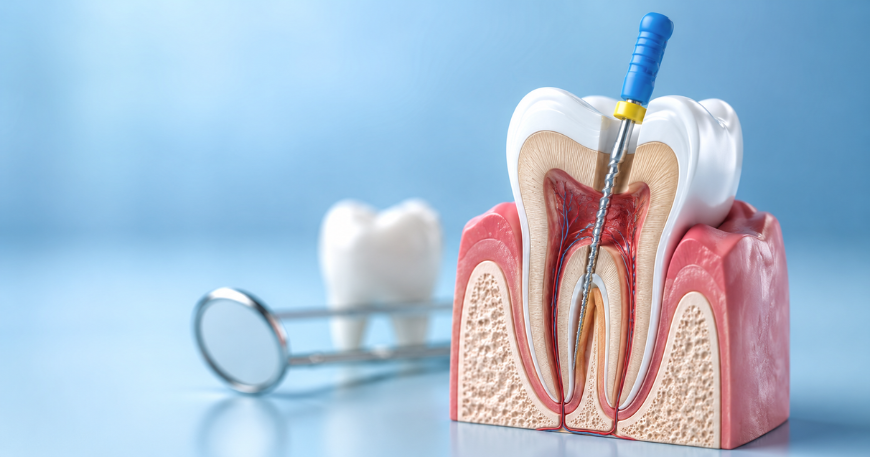
If your dentist has told you that you need a root canal, the words alone can make the treatment sound more complicated than it actually is.
A root canal is a dental treatment used to save a tooth when the soft tissue inside it, known as the pulp, becomes inflamed, badly damaged or infected. Instead of removing the entire tooth, the dentist removes the affected pulp, cleans the inside of the tooth and seals it to protect it from further infection.
In simple terms, root canal treatment deals with the problem inside the tooth while allowing you to keep the natural tooth itself.
Here is what happens during treatment, why you might need it, what recovery feels like and when a dental crown may be recommended.
What Is Root Canal Treatment?
Root canal treatment, also known as endodontic treatment, is a procedure that removes infected or inflamed pulp from inside a tooth.
Every tooth has several layers. The outside is protected by enamel. Underneath is dentin, and deeper inside is a softer area called the dental pulp.
The pulp contains nerves, blood vessels and connective tissue. When bacteria reach this area because of deep decay, a crack, trauma or another dental problem, the pulp can become inflamed or infected.
During a root canal treatment, the dentist removes this affected tissue, cleans and disinfects the root canals and then fills and seals the space.
Why Would a Tooth Need a Root Canal?
A small cavity usually affects the outer layers of a tooth and can often be repaired with a dental filling. The situation changes when decay progresses much deeper. Once bacteria reach the pulp, a simple filling may no longer solve the issue. The pulp can become severely inflamed or infected, sometimes resulting in an abscess.
Common reasons for a root canal treatment include:
- Deep tooth decay
- A cracked or chipped tooth
- Repeated dental treatment on the same tooth
- Trauma or injury to a tooth
- Infection inside the tooth
- A dental abscess
- Significant damage beneath an existing restoration
Leaving an infected tooth untreated can make the situation worse and saving the tooth become more difficult.
How Do You Know You Need a Root Canal?
Not every toothache means you need root canal treatment. Sensitivity can come from cavities, gum problems, cracked teeth, worn enamel and several other conditions. There are, however, certain symptoms that should be checked by a dentist.
Signs you may need a root canal include:
- Persistent toothache
- Pain that keeps returning or does not settle may indicate a problem deeper inside the tooth.
- Pain when biting or chewing
- An infected or inflamed tooth may become particularly uncomfortable when pressure is applied.
- Sensitivity that lingers
A brief reaction to something cold does not necessarily mean you need a root canal. Sensitivity to hot or cold that continues after the food or drink has been removed can be more concerning.
- Swollen or tender gums: Inflammation around one particular tooth may be associated with infection.
- A small bump on the gum: A pimple like bump near the affected tooth can sometimes be related to drainage from an infection.
- Cracked or damaged tooth: Cracks can provide a pathway for bacteria to reach the pulp.
- Tooth discoloration: Some damaged teeth become noticeably darker, particularly following trauma.
These symptoms don’t confirm that you need treatment. Your dentist will normally examine the tooth and may take an X-ray with additional tests before recommending a root canal.
How Is a Root Canal Done?
Although every case is different, root canal treatment of teeth generally follows several predictable steps.
- Examining the tooth: Your dentist first examines the affected tooth and surrounding gums. Dental X-rays may be taken to understand the condition of the tooth and its roots.
- Numbing the area: Local anesthesia is used to numb the tooth and surrounding area. This means you should not feel the actual cleaning of the canals, although you may notice pressure or movement during treatment.
- Isolating the tooth: A dental dam may be placed around the tooth. This small protective sheet helps keep the treatment area clean and dry.
- Opening the tooth: The dentist makes a small opening through the top of the tooth to reach the pulp chamber and root canals.
- Removing the infected pulp: Very small dental instruments are used to remove inflamed, infected or damaged pulp from inside the tooth.
- Cleaning the root canals: Once the pulp has been removed, the canals are carefully cleaned, disinfected and shaped. This is an important part of the root canal procedure because the dentist needs to prepare the canals before they can be sealed.
- Filling and sealing the canals: The cleaned canals are filled with a biocompatible dental material, commonly a rubber-like material called gutta-percha, and sealed. A temporary or permanent filling may then be placed to close the opening in the tooth.
- Restoring the tooth: Depending on how much tooth structure remains and which tooth was treated, the final step may involve a permanent filling or dental crown.
Back teeth, especially molars and premolars, often need greater protection because they handle considerable chewing pressure.
Does a Root Canal Hurt?
This is probably the question dentists hear most often. Modern root canal treatment is performed using local anesthesia. The purpose of the procedure is actually to remove the inflamed or infected tissue that may be responsible for your toothache.
Most patients can expect to feel pressure or movement rather than sharp pain during the procedure. Once the anesthesia wears off, the treated area can feel tender or sensitive for a few days. That does not automatically mean something has gone wrong.
Severe pain, increasing swelling or discomfort that continues instead of improving should be discussed with your dentist.
How Long Does a Root Canal Take?
There isn’t one treatment time for every patient. The length of your appointment depends on factors such as:
- Which tooth is being treated
- The number and shape of its canals
- How extensive the infection is
- Whether previous dental treatment is present
- Any additional restoration is required
A straightforward root canal may be completed in one visit, while other cases need two or more appointments. Individual appointments commonly take around 60 to 90 minutes, although more complicated cases can take longer.
Do I Need a Crown After a Root Canal?
Not every root canal-treated tooth automatically needs a crown, but many do. A tooth requiring root canal treatment has often already lost significant structure because of decay, cracks or previous fillings.
A dental crown covers and protects the remaining tooth structure while restoring its shape and chewing function. Crowns are particularly common after root canal treatment on premolars and molars because these teeth absorb more chewing forces. Front teeth may sometimes be restored differently if enough healthy tooth structure remains.
Your dentist will assess how much healthy tooth remains before recommending the most appropriate restoration.
Can You Eat After a Root Canal Without a Crown?
You can usually eat after root canal treatment, but you need to be careful.
First, wait until the numbness has worn off unless your dentist tells you otherwise. Eating while your mouth is still numb makes it easier to accidentally bite your cheek, lip or tongue.
If you have a temporary filling and are waiting for a permanent crown, avoid putting unnecessary pressure on the treated tooth. Choose softer foods and chew on the opposite side when possible.
Good food options can include:
- Eggs
- Yogurt
- Pasta
- Soft rice
- Soup that isn’t very hot
- Soft cooked vegetables
- Fish
- Mashed potatoes
Avoid very hard, sticky or crunchy foods around the treated tooth until your dentist confirms that it has been permanently restored. A root canal removes the infection inside the tooth, but the remaining tooth structure still needs to be protected.
What to Do After Root Canal Treatment
Your mouth may remain numb for several hours after the appointment. Mild tenderness around the treated tooth can also occur.
After treatment:
- Follow the instructions given by your dentist.
- Avoid chewing on the treated tooth until advised that it is safe.
- Brush and floss normally but gently around sensitive areas.
- Attend your follow-up appointment.
- Complete the final filling or crown when recommended.
- Avoid smoking while the area is recovering.
- Contact your dentist if pain or swelling becomes severe or gets worse.
Most people return to their normal daily routine quickly, although some sensitivity can remain for several days.
Can Antibiotics Heal an Infected Root Canal?
Antibiotics alone generally cannot remove infected or dead pulp from inside a tooth. When the source of infection is within the root canal system, the affected tissue usually needs to be physically removed and the canals cleaned and sealed.
Antibiotics may be prescribed in certain situations, particularly when a dental infection has spread beyond the tooth or there are other clinical reasons for using them. They are not a substitute for treating the source of an infected root canal.
Never start leftover antibiotics or use someone else’s medication for tooth pain. A dentist needs to determine what is actually causing the problem.
How Is a Root Canal Infection Treated?
If the pulp is infected for the first time, conventional root canal treatment may be used to remove the infected tissue and clean the canals.
But what if a tooth that already had a root canal becomes infected again?
A dentist or endodontist will need to determine why.
Possible treatment may include:
- Root canal retreatment
- Endodontic surgery in selected cases
- Treatment of the surrounding infection
- Extraction when the tooth can no longer be predictably restored
The best option depends on the condition of the root, surrounding bone, previous restoration and how much healthy tooth remains.
Can a Root Canal Cause Bad Breath?
A properly treated and restored root canal should not normally cause persistent bad breath by itself. Bad breath has many possible causes, including plaque buildup, gum disease, dry mouth, food debris and other dental problems.
However, an infected tooth or a root canal-treated tooth that has developed a new problem may sometimes contribute to an unpleasant taste or odour.
If you notice persistent bad breath together with tooth pain, swelling, gum drainage or a bad taste around one particular tooth, arrange a dental examination rather than trying to cover the smell with mouthwash.
Which Is Better: Root Canal or Extraction?
Whenever a tooth can be predictably saved, preserving the natural tooth is often an important consideration.
Root canal treatment
A root canal removes the damaged or infected pulp while keeping the natural tooth in your mouth.
Potential advantages include:
- Keeping your natural tooth
- Maintaining normal chewing function
- Avoiding an immediate gap
- Reducing the need to replace a missing tooth
Tooth extraction
Extraction removes the entire tooth. It may be necessary when a tooth is too badly damaged to restore, has a severe fracture, lacks sufficient bone support or cannot be successfully treated.
After tooth extraction, replacing the missing tooth with a dental implant, bridge or another suitable restoration may be recommended depending on the situation.
So, root canal vs extraction isn’t simply a question of which treatment is better. The real question is whether the affected tooth can be successfully saved.
How Much Is a Root Canal and Crown?
The total root canal and crown cost can vary considerably from one patient to another.
Factors that can affect the price include:
- Whether the tooth is a front tooth, premolar or molar
- Number and complexity of the root canals
- Severity of the infection
- Whether retreatment is required
- Amount of remaining tooth structure
- Type and material of the crown
- Additional X-rays or dental procedures required
Molars can be more complicated to treat because they commonly have multiple canals. The final cost therefore shouldn’t be estimated from the root canal procedure alone if the tooth also requires a crown.
A dental examination and X-ray allow your dentist to provide a more accurate treatment plan and cost.
Looking for expert dental care? Visit our dental clinic in Al Barsha for comprehensive dental treatments and personalized care.
What Happens If You Don’t Get a Root Canal?
An infected pulp generally doesn’t become healthy again simply because the tooth temporarily stops hurting. In fact, pain can sometimes decrease when the pulp dies, while infection remains around the root.
Without appropriate treatment, an infected tooth may eventually lead to:
- Increasing pain
- Gum or facial swelling
- Dental abscess
- Infection around the root
- Damage to supporting tissues
- Loss of the affected tooth
This is why persistent tooth pain, swelling or signs of infection shouldn’t be ignored.
How Long Does a Root Canal Last?
A successfully treated and properly restored tooth can continue functioning for many years.
Good oral hygiene, the quality of the final restoration, how much natural tooth remains, biting forces and regular dental care all matter.
The American Association of Endodontists notes that with proper care, many root canal treated teeth can last a lifetime.
That makes the final restoration and ongoing dental care just as important as completing the root canal procedure.
When Should You See a Dentist?
Don’t wait for tooth pain to become unbearable.
Book a dental examination at Esthetix Dental Center if you have persistent toothache, prolonged hot or cold sensitivity, pain when biting, swelling around a tooth, a cracked tooth or a pimple-like bump on the gums.
The earlier the cause is identified, the better the chance your dentist has of preserving the tooth.

